comparison9 წთ10 ივლისი, 2026
ლაზერული ჭრა თუ გრავირება? რომელი ტექნოლოგია და მასალა შევარჩიოთ
ავტორი: Craftarea Editorial Teamგადახედილი: Craftarea Editorial Teamბოლო განახლება:
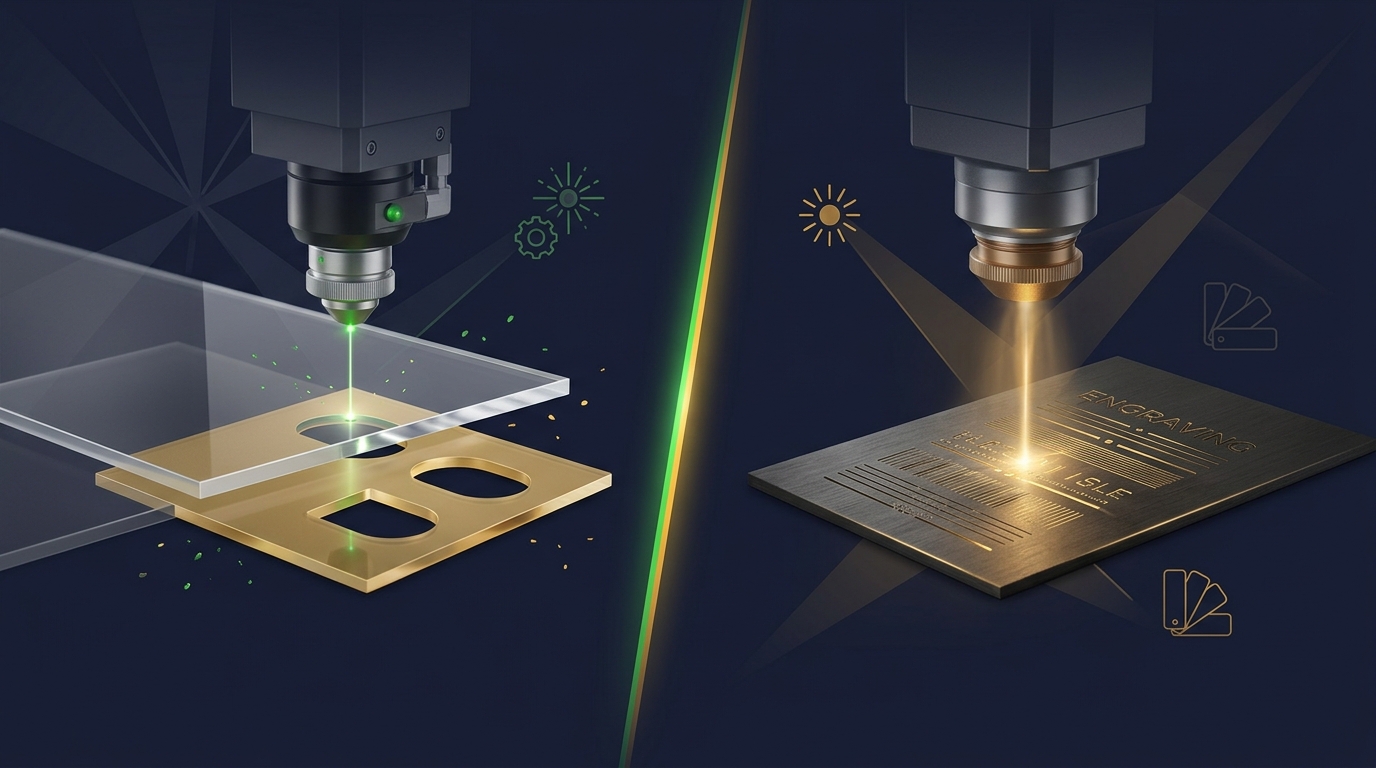
If you are asking, "ლაზერული ჭრა თუ გრავირება? რომელი ტექნოლოგია და მასალა შევარჩიოთ" (Laser cutting or engraving?), the verdict is simple. Choose laser cutting to slice entirely through materials to create structural shapes, outlines, and standalone letters. Conversely, select laser engraving to vaporize only the surface layer, creating permanent, detailed designs.
Your final choice depends entirely on whether you need a new physical shape or a customized surface. Both technologies utilize highly focused light beams, but they achieve drastically different results. Understanding these nuances is crucial for optimizing your production budget and achieving a professional finish.
Craftarea, an advertising company in Tbilisi, Georgia, has utilized these advanced technologies extensively. With over seven years of experience and more than 500 completed projects, we know exactly how to match the right technique to your vision. Let us explore the technical differences, material compatibilities, and industry best practices.
Understanding the Core Question: ლაზერული ჭრა თუ გრავირება? რომელი ტექნოლოგია და მასალა შევარჩიოთ
To make an informed decision, you must first understand the foundational physics behind laser technology. The term "laser" stands for Light Amplification by Stimulated Emission of Radiation. In the manufacturing and advertising industries, this concentrated light beam is controlled by CNC (Computer Numerical Control) systems.
According to industry research, CO2 lasers operating at a wavelength of 10.6 micrometers are the most versatile machines for non-metal advertising materials. These systems can seamlessly switch between cutting and engraving modes within a single job. However, the machine parameters must be drastically altered depending on the desired outcome.
When deciding between the two, you are fundamentally choosing between altering a material's outer geometry or its surface texture. A successful project often requires a strategic combination of both methods. Let us break down how each specific process functions on a technical level.
The Technology Explained: Cutting vs. Engraving
While the same machine often performs both tasks, the methodology differs completely. The primary variables are laser power, travel speed, and the specific focal point of the lens.
The Mechanics of Laser Cutting
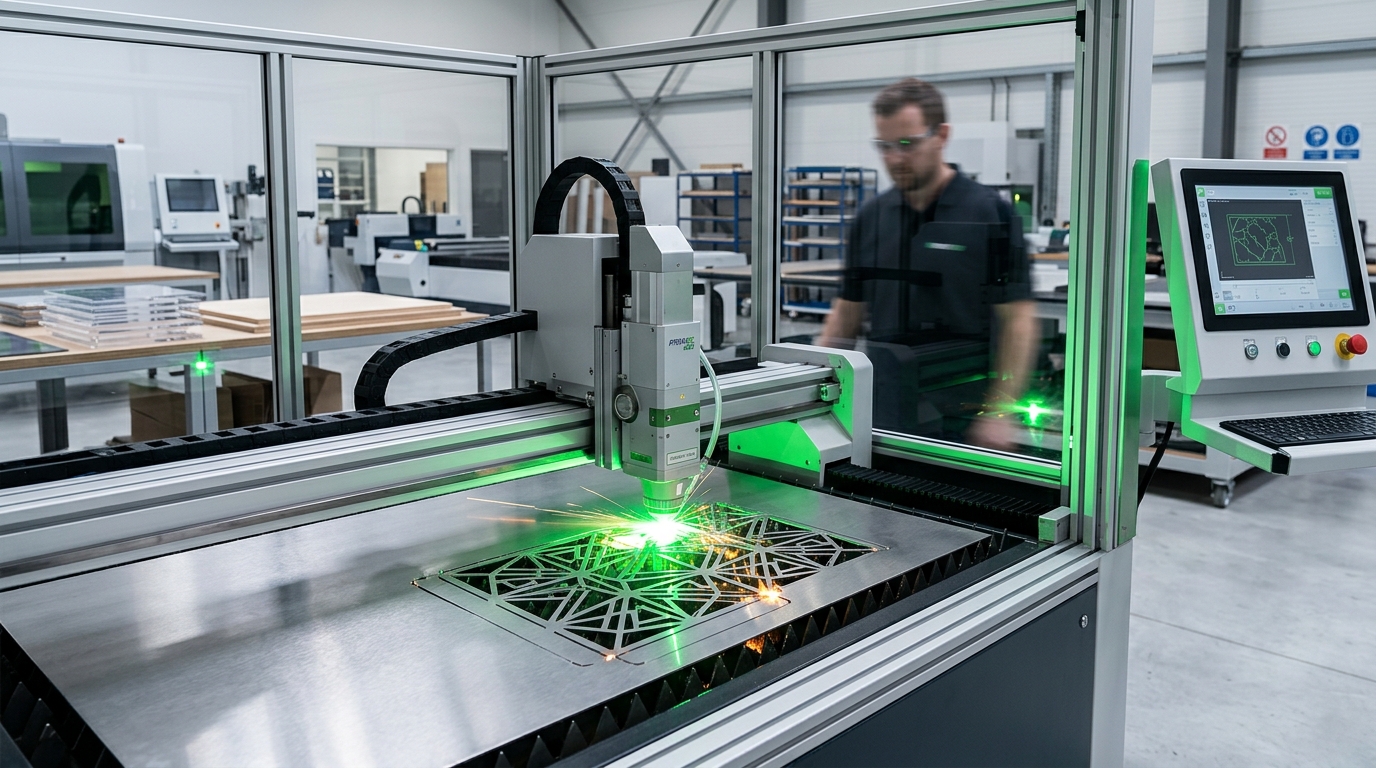
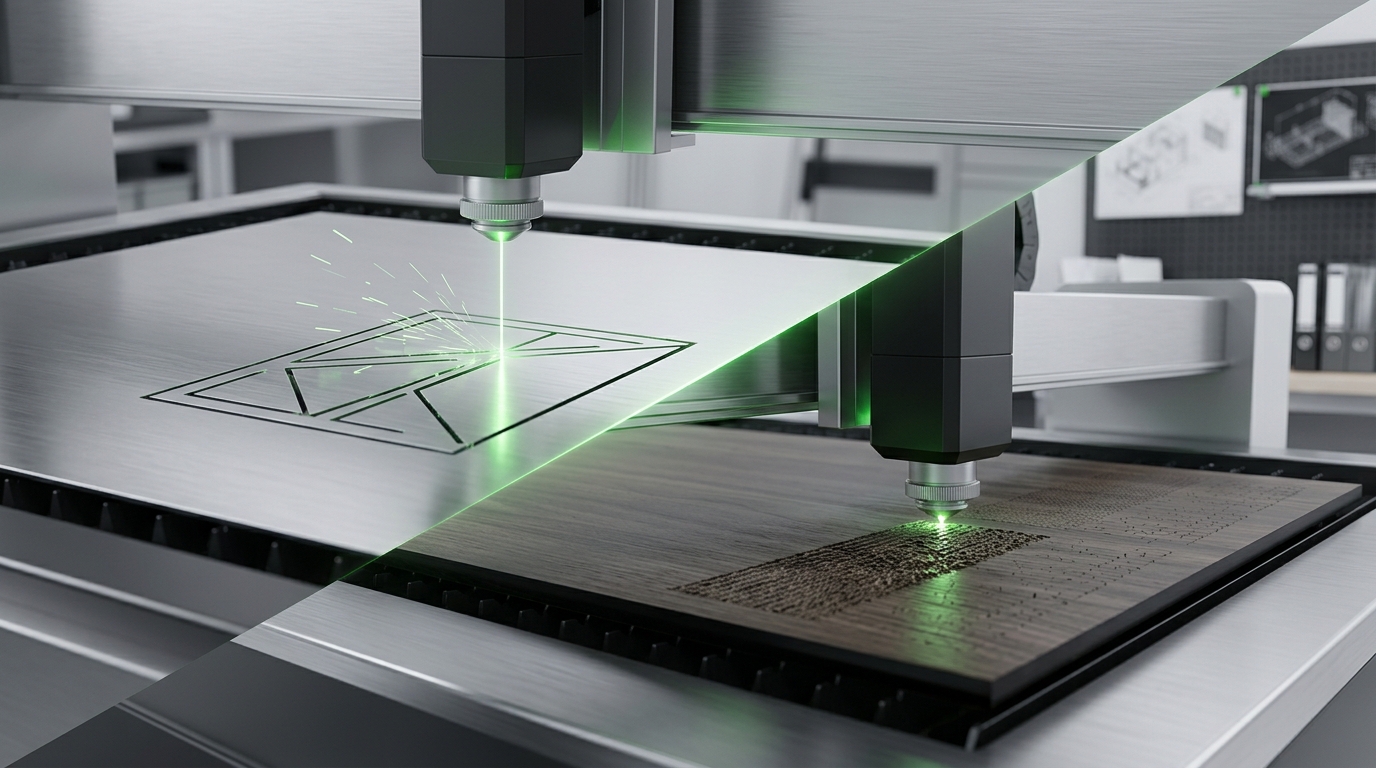
Laser cutting is a thermal separation process. The machine is programmed to deliver high power output while moving the laser head at a relatively slow speed. This combination generates intense, concentrated heat that melts, burns, or vaporizes the material completely through its entire thickness.
During cutting, the laser follows continuous vector paths—essentially digital outlines. As the beam moves, a high-pressure stream of air (called air assist) blows away the molten debris. This results in a clean, precise edge. This method is essential for creating custom shapes, structural components, and distinct silhouettes.
The Mechanics of Laser Engraving
Laser engraving, on the other hand, is a surface removal process. The machine uses lower power settings and moves the laser head at much higher speeds. Instead of slicing through the material, the beam rapidly pulses to vaporize microscopic layers from the surface, creating a visible depression.
Engraving operates similarly to an inkjet printer. The laser head sweeps back and forth horizontally across the material, firing tiny dots of energy to build up a rasterized image. This technique is perfect for adding complex typography, intricate logos, and detailed photographic images to an existing object without compromising its structural integrity.
Comprehensive Comparison Table
To quickly summarize the operational differences, review the comparison table below. This breakdown highlights the core distinctions between the two processes.
| Feature | Laser Cutting | Laser Engraving |
|---|---|---|
| Primary Purpose | Slicing through material to create shapes | Marking the surface to create designs |
| Machine Movement | Follows continuous vector outlines | Sweeps back and forth (rastering) |
| Power & Speed | High power, slow speed | Low power, high speed |
| File Format Required | Vector only (AI, EPS, DXF) | Vector or Raster (JPEG, PNG, BMP) |
| Depth of Action | Full material thickness | Surface level (microns to millimeters) |
Best Materials for Laser Cutting
Selecting the right material is just as important as choosing the right process. Not all materials react to intense heat in the same way. Here are the most effective materials for laser cutting in the advertising industry.
Acrylic (Plexiglass)
Acrylic is arguably the most popular material for laser cutting. When a CO2 laser slices through cast acrylic, the heat instantly melts and seals the edge, resulting in a perfectly smooth, flame-polished finish. This eliminates the need for post-production sanding or buffing.
We frequently cut thick acrylic to manufacture premium 3D volumetric letters for illuminated storefronts. It is durable, weather-resistant, and available in a massive variety of colors and opacities, making it ideal for high-end branding.
Wood, Plywood, and MDF
Wood is highly receptive to laser cutting. Plywood and MDF (Medium-Density Fiberboard) are staples for creating structural displays, custom packaging, and architectural models. The laser easily slices through these organic materials, leaving a distinct, darkened edge caused by the burning process.
This dark edge, often called the kerf burn, provides a rustic, high-contrast aesthetic that many brands desire. However, the thickness of the wood is a limiting factor; most standard commercial lasers excel at cutting wood up to 10mm to 12mm thick before edge charring becomes excessive.
Paper and Cardboard
For intricate, delicate designs, laser cutting paper and cardboard is unmatched. The laser can cut microscopic details that traditional die-cutting machines simply cannot achieve. This is particularly useful for premium packaging, custom stencils, and unique event invitations.
Many businesses utilize laser-cut cardstock to create unforgettable custom business cards. By cutting out intricate geometric patterns or negative-space logos, brands can create a tactile experience that immediately stands out to potential clients.
Best Materials for Laser Engraving
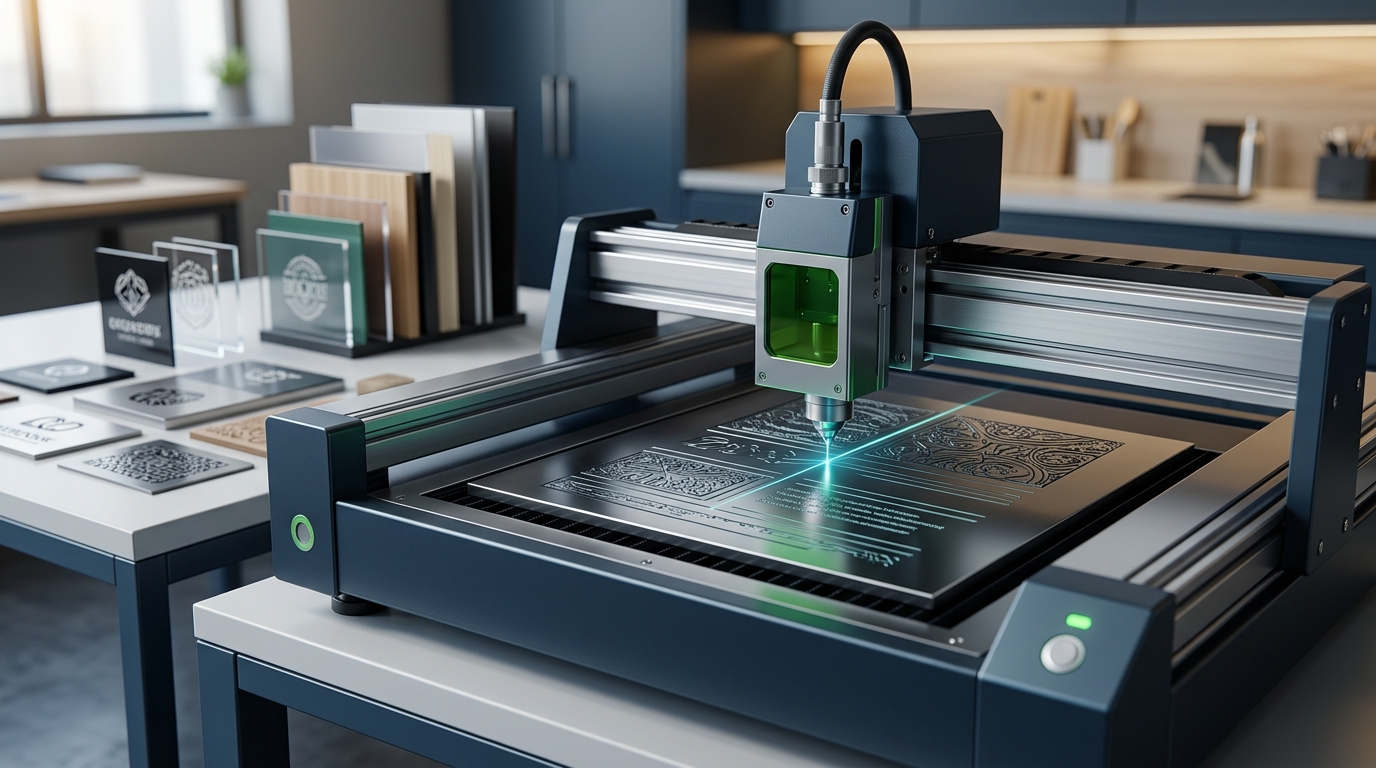
When your goal is to add permanent branding to an object's surface, laser engraving is the superior choice. The following materials yield the highest quality engraved results.
Glass and Crystal
Laser engraving on glass produces a stunning, frosted effect. The heat of the laser causes microscopic fractures on the surface of the glass, resulting in a crisp, white mark. This technique is highly popular for corporate awards, custom drinkware, and decorative interior panels.
Because glass is fragile, the laser settings must be perfectly calibrated to prevent the material from shattering. A specialized rotary attachment is often used to engrave cylindrical objects like bottles and glasses seamlessly.
Coated and Anodized Metals
While standard CO2 lasers cannot cut through thick metal, they are exceptional at engraving coated metals. Anodized aluminum is a prime example. The laser vaporizes the colored anodized layer, exposing the bright, silver aluminum underneath.
This creates a permanent, high-contrast mark that will never fade or peel. It is heavily utilized for industrial nameplates, barcodes, and custom promotional branding items such as premium pens, keychains, and insulated thermoses.
Leather and Textiles
Laser engraving genuine or synthetic leather yields an elegant, debossed appearance. The laser burns away the top grain of the leather, leaving a dark, rich contrast. This is a favorite technique for customizing corporate portfolios, luxury apparel, and bespoke leather goods.
Certain textiles, such as fleece, denim, and microfiber, also engrave beautifully. The laser melts the fabric's surface slightly, creating a subtle, tactile branding effect without the need for traditional embroidery or heavy ink printing.
How to Decide: ლაზერული ჭრა თუ გრავირება? რომელი ტექნოლოგია და მასალა შევარჩიოთ
Making the final decision requires a careful analysis of your project's specific goals. If you find yourself asking, "ლაზერული ჭრა თუ გრავირება? რომელი ტექნოლოგია და მასალა შევარჩიოთ", follow these essential guidelines to determine the best path forward.
Step 1: Define the Physical Goal
Are you trying to create a new physical object from a flat sheet of material? If you need a custom-shaped sign backing, standalone alphabet letters, or a complex geometric stencil, laser cutting is your only option. You need the beam to slice completely through the material.
Alternatively, are you trying to personalize an object that already exists? If you want to add a corporate logo to a wooden box, etch a serial number onto a metal plate, or brand a leather notebook, laser engraving is the correct choice.
Step 2: Consider Production Time and Budget
Cost is a major factor in advertising production. Laser cutting is generally faster and therefore more cost-effective for covering large areas. The machine simply follows the outer perimeter of your design.
Engraving is significantly more time-consuming because the laser head must scan back and forth across the entire surface area of the design. If budget is a strict concern, consider combining high-quality UV printing for the surface graphics, followed by a quick laser cut for the outer shape.
Step 3: Analyze the Digital Artwork
The type of digital file you possess will dictate the process. Laser cutting absolutely requires vector graphics (lines and curves defined by mathematical formulas). If you only have a raster image (a photograph made of pixels), the machine cannot cut it.
Engraving, however, can process both vector and raster files. High-resolution photographs can be beautifully engraved onto wood or acrylic using specialized dithering software that converts pixels into varying densities of laser dots.
Advanced Technical Considerations for High-Quality Results
Achieving a flawless result requires more than just pressing a button. Expert operators must manage several complex variables during the manufacturing process.
Understanding Kerf Width
When a laser cuts through a material, it vaporizes a tiny portion of that material. The width of the material removed is called the "kerf." While extremely thin (often between 0.1mm and 0.3mm), the kerf must be accounted for in the digital design, especially when creating interlocking parts.
If the kerf is ignored, interlocking joints will be too loose. Professional designers manually offset the vector lines by half the kerf width to ensure a tight, precise fit for structural displays and 3D models.
The Importance of Focal Length
Laser lenses come in different focal lengths, typically ranging from 1.5 inches to 4 inches. A short focal length creates a highly concentrated, microscopic dot, which is perfect for ultra-high-resolution engraving on delicate surfaces.
Conversely, a longer focal length maintains a straight beam over a greater distance. This is essential for cutting thick materials like 10mm acrylic. If a short lens is used to cut thick material, the edge will become severely slanted or beveled.
Craftarea’s Expertise in the Georgian Market
In Georgia, extreme summer heat and winter humidity mean that advertising materials must be chosen with immense care. Based on Craftarea's experience with 200+ clients across Tbilisi and beyond, we understand the specific environmental demands placed on physical branding.
We frequently utilize laser cutting to manufacture durable outdoor advertising structures. By cutting weather-resistant acrylics and specialized outdoor composites, we ensure that our clients' signage withstands the harsh Georgian climate without warping or fading.
Furthermore, our integrated approach allows us to combine technologies. We often laser cut intricate base shapes and then utilize precision engraving to add fine details to custom interior signage for hotels, restaurants, and corporate offices throughout Tbilisi. With 7+ years of industry leadership, we guarantee unparalleled precision.
Frequently Asked Questions (FAQ)
To provide further clarity, we have compiled the most common questions our clients ask regarding laser technologies and material selection.
What is the main difference between laser cutting and laser engraving?
The primary difference lies in the laser's depth and purpose. Laser cutting uses high power and slow speeds to slice completely through a material, creating physical shapes and outlines. In contrast, laser engraving uses lower power and higher speeds to remove only the top layer of a material. Engraving creates permanent visible marks, textures, or images without altering the object's core structural integrity.
Can you laser cut and engrave on the exact same material?
Yes, combining both techniques on a single piece of material is highly common and efficient. For example, Craftarea frequently engraves intricate corporate logos onto a solid sheet of acrylic or wood, and then uses the laser cutting function to cut out the final shape. This dual process is heavily utilized for producing custom awards, detailed promotional items, and sophisticated architectural signage.
Which materials are strictly prohibited for laser machines?
You must never laser cut or engrave materials containing PVC (polyvinyl chloride) or vinyl. When exposed to a high-heat laser beam, these plastics emit toxic, highly corrosive chlorine gas. This noxious gas is extremely dangerous to human operators and will rapidly destroy the machine's metal components and optics. Always verify your material's exact chemical composition before placing it inside any laser system.
How does the cost compare between cutting and engraving services?
Laser engraving is typically more time-consuming than cutting, which often makes it slightly more expensive. Engraving requires the laser head to move back and forth across the entire surface area, similar to an inkjet printer. Cutting only requires the laser to follow a single, continuous outer vector path. Therefore, large-scale engraved designs will incur higher machine-time costs compared to simple perimeter cuts.
What digital file formats are required for these laser processes?
For laser cutting, you must provide vector files, such as AI, EPS, DXF, or SVG formats. Vector lines guide the laser path precisely. For laser engraving, you can use either vector files or high-resolution raster images, such as JPEG, PNG, or BMP formats. Our design team at Craftarea always reviews and optimizes your files to ensure the highest quality output for your specific project.
How long does a typical laser project take at Craftarea?
Project turnaround times depend heavily on the material volume and design complexity. Small batches of engraved promotional items or simple cut acrylic letters can often be completed within two to three business days. Larger structural installations or bulk orders for outdoor advertising may require one to two weeks. We always provide a precise timeline during our initial consultation to meet your deadlines.
Conclusion
Navigating the complex world of modern manufacturing can be challenging, but understanding the fundamentals makes the process seamless. If you started this journey wondering, "ლაზერული ჭრა თუ გრავირება? რომელი ტექნოლოგია და მასალა შევარჩიოთ", you now have the definitive answer. Choose cutting for structural geometry and engraving for permanent surface detailing.
By selecting the correct material—whether it is sleek acrylic, rustic wood, or premium coated metal—you guarantee a professional result that elevates your brand identity. The right combination of technology and material is the secret to impactful advertising.
Are you ready to bring your vision to life? Explore our extensive portfolio on the Craftarea blog or read more about our company history. Contact Craftarea today, and let our expert team in Tbilisi engineer the perfect laser-cut or engraved solution for your next big project.