
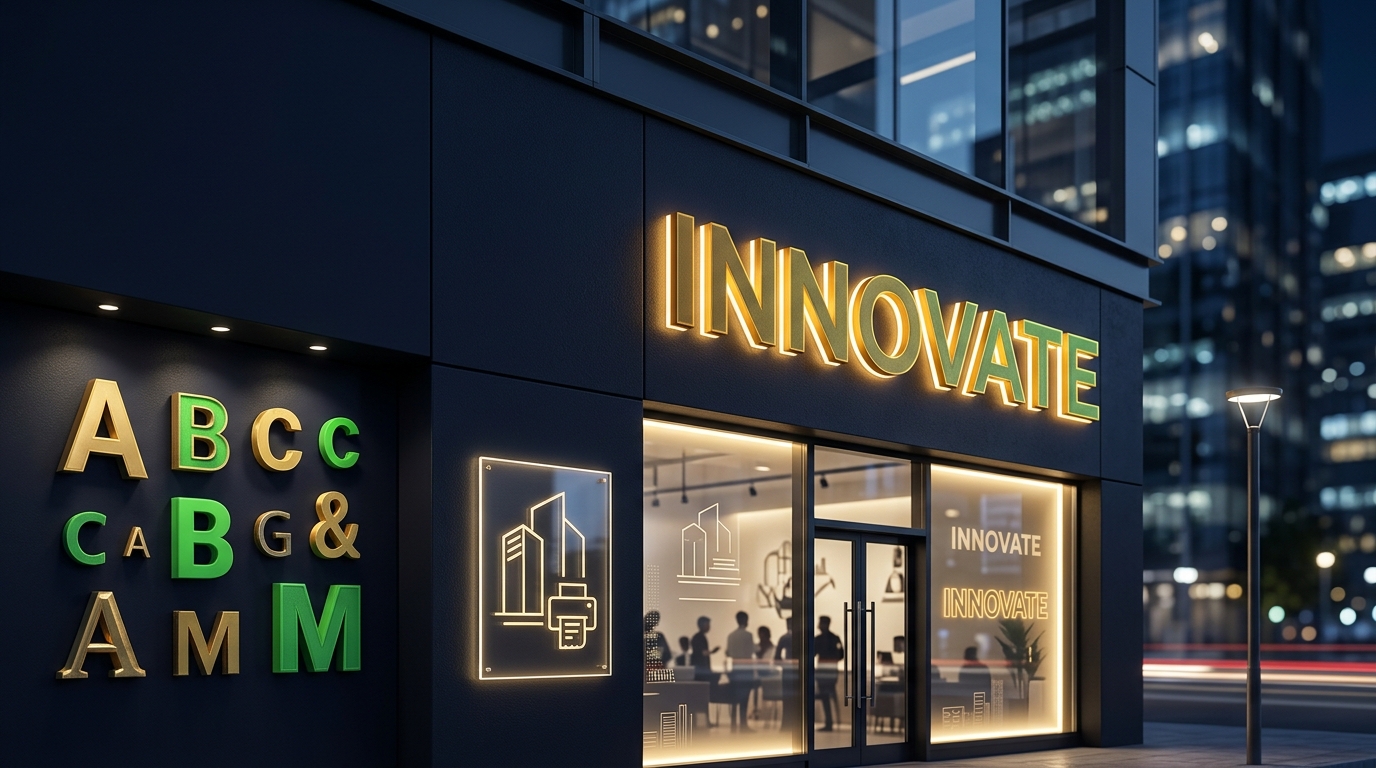
Integrating additive manufacturing into commercial branding is rapidly transforming storefront design. Using 3d printed letters for signage provides incredible flexibility, allowing for intricate details and entirely custom shapes. Whether you need durable exterior displays or lightweight interior logos, this method offers a versatile solution tailored to your exact branding needs.
The Shift to Additive Manufacturing in Signage
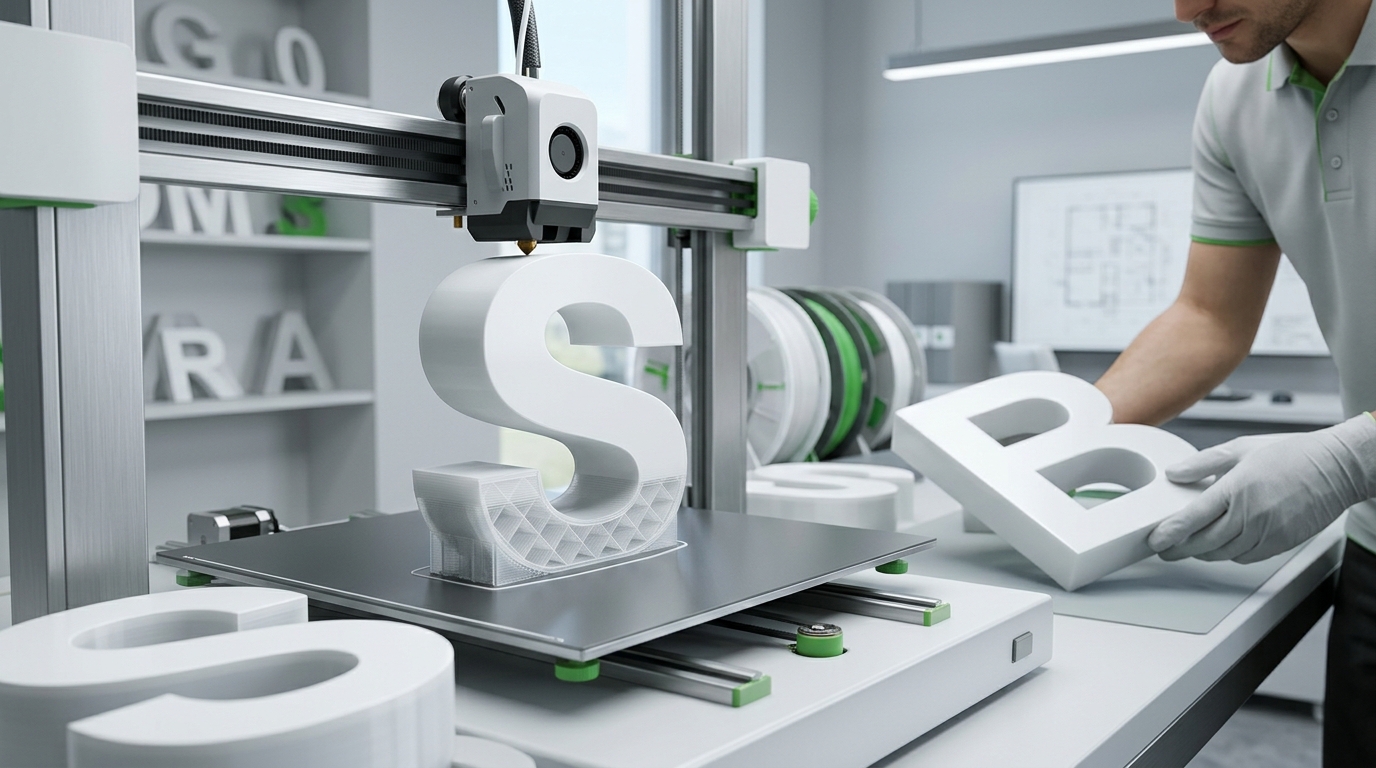
Historically, dimensional signage relied heavily on subtractive manufacturing techniques, such as CNC routing or bending sheet metal. Adopting 3d printed letters for signage introduces a fundamentally new production paradigm to the industry. Instead of cutting away excess material, 3D printing builds each letter layer by layer. This targeted process minimizes material waste and creates complex internal support structures that keep the final product lightweight yet structurally sound.
Overcoming Traditional Limitations
Traditional fabricated channel letters require a metal return to be bent manually around a flat face. This limits the minimum size and severely restricts font design complexity. Sharp serifs and incredibly tight curves can be physically impossible to bend using standard metalworking tools. Implementing 3d printed letters for signage completely eliminates these physical constraints.
The nozzle of an industrial 3D printer can trace virtually any complex vector path. This means highly customized, intricate, and small-scale channel letters are produced with absolute precision. Because 3d printed letters for signage utilize specialized internal infill patterns, they achieve remarkable rigidity without dense mass. This weight reduction directly simplifies installation and reduces the need for heavy-duty mounting hardware.
Material Options for 3d Printed Letters for Signage
The long-term durability and visual appearance of any commercial sign depend heavily on the materials chosen. While commercial 3D printing utilizes specialized thermoplastics, these foundational filaments are frequently combined with other components for a professional finish.
- PETG (Polyethylene Terephthalate Glycol): A popular choice for both indoor and outdoor applications due to its baseline durability and excellent impact resistance.
- ASA (Acrylonitrile Styrene Acrylate): Engineered to be highly UV resistant, making it ideal for demanding outdoor environments without yellowing or cracking.
- PLA (Polylactic Acid): Best suited exclusively for temporary displays or strictly indoor, climate-controlled signage, as it can warp under high heat.
- Hybrid Acrylic: Often, a 3D printed structural body is seamlessly combined with a precision laser-cut acrylic face for optimal light diffusion.
- Metallic Finishes: 3d printed letters for signage can be sanded and coated with automotive-grade primers and metallic paints to simulate authentic metal.
Illumination and Mounting Strategies
One of the most transformative advantages of 3D printing in commercial signage is the ability to easily custom-design internal cavities. 3d printed letters for signage can natively include specific internal baffles, precise wiring channels, and specialized stand-offs directly in the 3D model. This built-in customization guarantees flawless integration with commercial LED systems.
Lighting Configurations
- Front-Lit: Internal LED modules face directly forward, illuminating a translucent acrylic face for maximum visibility.
- Halo-Lit: 3D printed signs project light backward onto the mounting wall using custom-length internal standoffs, creating a soft glowing effect.
- Edge-Lit: Internal light-blocking baffles are printed into the letter, directing the LED output specifically to the glowing perimeter.
Architectural Installation
The specific method used to attach your signage is critical for structural safety and maintaining your aesthetic vision. 3d printed letters for signage offer unique advantages here, as custom mounting hardware is often integrated directly into the digital file.
- Flush Mounting: Lightweight interior 3d printed letters for signage frequently use specialized construction adhesives or industrial VHB tape.
- Standoff Mounting: Digital files include precise structural sleeves for metal standoff barrels, ensuring every letter sits evenly off the wall.
- Raceway Configurations: Signs are mounted to a fabricated metal raceway that houses electrical components, requiring fewer penetrations into the building's exterior.
Pricing and Production Variables
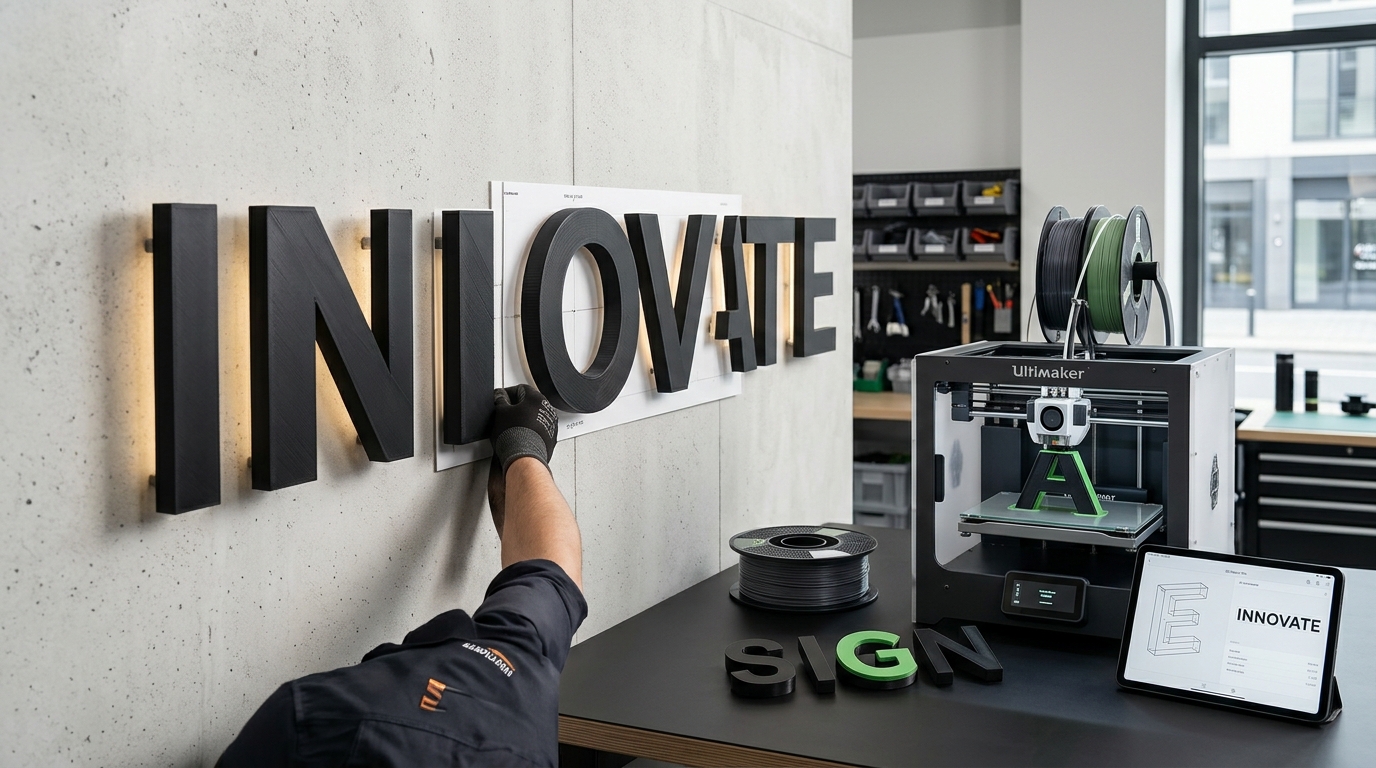
When researching commercial upgrades, business owners often look for a standard 3D acrylic letter sign board price. Because every commercial sign is custom-made to order, flat-rate pricing does not apply. The final cost of 3d printed letters for signage depends on several very specific project inputs.
- Scale and Volume: Larger, denser letters require more raw thermoplastic filament and significantly longer machine print durations.
- Material Selection: Opting for high-performance, UV-resistant ASA or integrating specialty hybrid finishes increases the overall material price.
- Illumination Requirements: Adding commercial-grade LEDs, waterproof sealing, and complex internal wire routing adds notably to the total cost.
- Post-Processing: Creating a flawless, smooth finish on 3d printed letters for signage demands meticulous manual sanding, priming, and hand-painting.
The Custom Manufacturing Process
Creating highly durable, custom 3d printed letters for signage involves a precise, multi-step engineering workflow. This meticulous process ensures both long-term structural durability and striking visual appeal.
- Digital Design: Client-provided vector logos are mathematically extruded into complex 3D models containing all necessary internal routing.
- 3D Printing: Advanced industrial-grade printers produce the components accurately. You can explore our specific technical capabilities on our 3D printing services page.
- Assembly & Testing: For illuminated signs, commercial LEDs are carefully installed, and the completed letters are rigorously bench-tested in a dark environment for uniform light diffusion.
Hypothetical Application Scenarios
To better understand how 3d printed letters for signage are actively utilized, exploring potential design concepts can be highly beneficial. Please note that the following examples are strictly hypothetical illustrations meant to demonstrate manufacturing capabilities, and do not represent completed Craftarea projects.
- The Modern Boutique Cafe: A warm, inviting exterior presence could be achieved using 3d printed letters for signage printed in durable ASA with a sleek matte black finish. Custom standoffs would perfectly cast a soft, 3000K halo-lit glow against an exterior brick facade.
- The Innovative Tech Startup: An eye-catching reception logo might feature highly complex, razor-sharp geometric font angles that are impossible to bend from standard aluminum. These specific 3d printed letters for signage could creatively combine white PETG returns with vibrant, laser-cut colored acrylic faces.
Ordering Your 3d Printed Letters for Signage
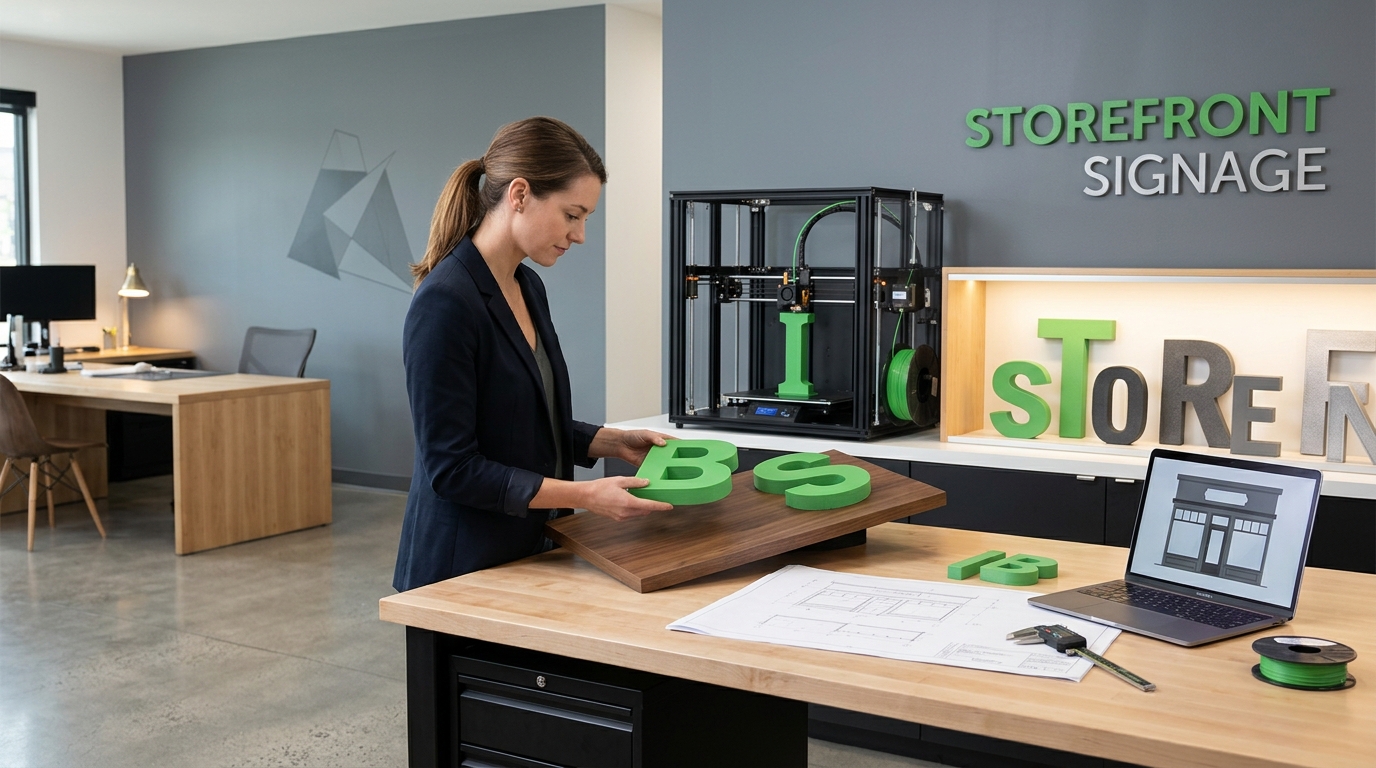
Choosing the absolute right manufacturing method depends entirely on the unique functional needs of your commercial branding. Utilizing 3d printed letters for signage provides a highly modern approach that truly excels in delivering complex designs and seamlessly integrated architectural lighting.
However, depending entirely on your required physical scale and operating budget, exploring other commercial avenues may be appropriate. Investigating traditional 3D letters, custom bent glass neon signs, or highly engineered outdoor advertising structures might align better with massive exterior installations.
To receive a highly accurate quote for your specific 3d printed letters for signage, Craftarea requires several inputs. You must supply your digital vector artwork, preferred physical dimensions, exact desired materials, and detailed architectural lighting preferences. You can easily provide these project details directly to our team by visiting our contact page.