
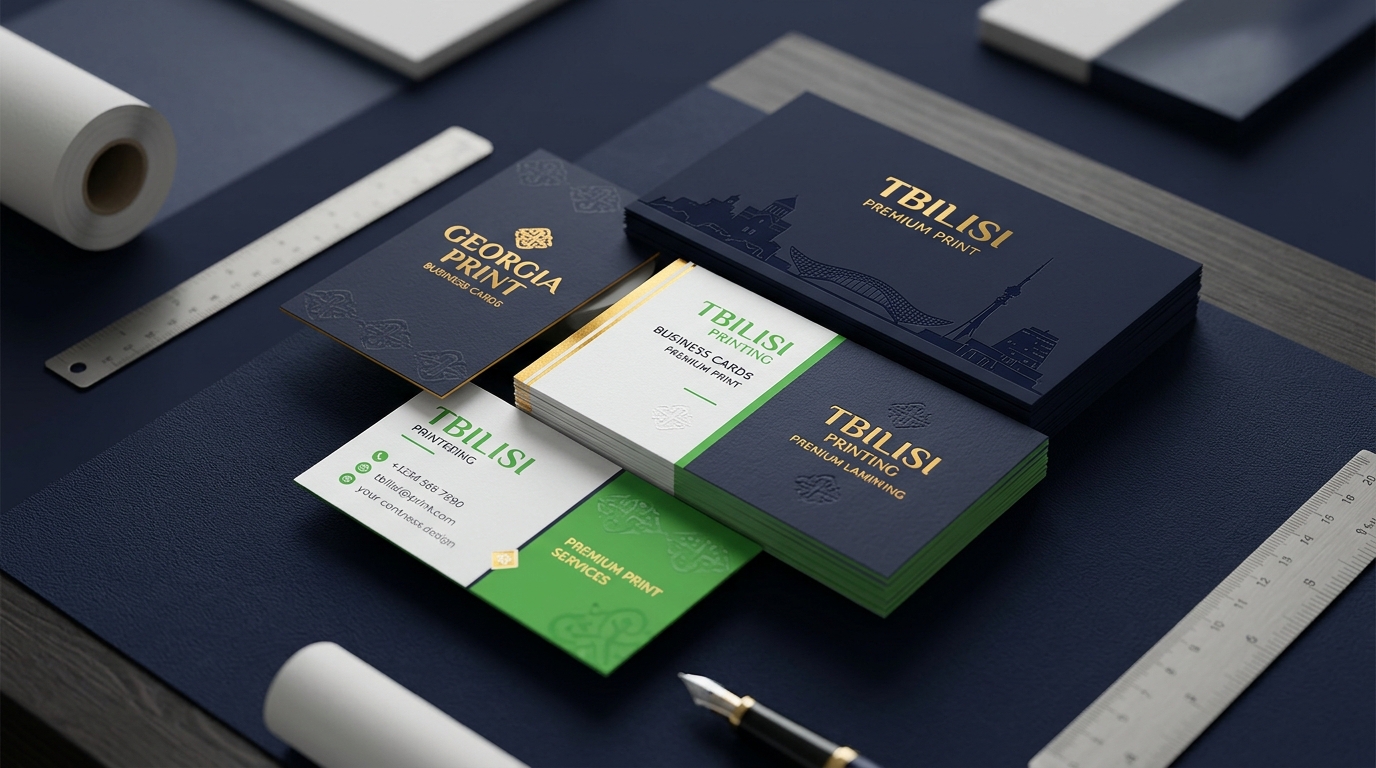
When organizing your professional presence, securing high-quality business card printing in Tbilisi is a critical step. A well-crafted business card does more than share your contact information; it communicates your brand's attention to detail, quality, and style through tactile materials and precise printing. Whether you are an entrepreneur attending a networking event, a corporate executive needing premium foil-stamped cards, or a visitor suddenly searching for "printing services near me open" after leaving your cards at home, understanding your printing options ensures you get the best possible result.
Craftarea, a dedicated printing company in Tbilisi operating since 2018, handles a wide spectrum of printing requirements. This guide explores the technical choices involved in producing professional business cards, from selecting the right paper stock to understanding turnaround times and post-press finishes.
The Anatomy of a Professional Business Card
Before diving into materials and machines, it is important to understand standard sizing. In Georgia and throughout most of Europe, the standard business card size is 85 x 55 mm. This size fits perfectly into standard wallets and cardholders. The US standard size (89 x 51 mm) is also frequently requested. While custom sizes and square cards (e.g., 55 x 55 mm) are popular for creative industries, standardizing your size often allows for more efficient printing and cutting.
Choosing the Right Paper Stock
The foundation of any great card is the material it is printed on. When you visit a printing shop in Tbilisi, you will typically be asked about paper weight and finish. Paper weight is measured in GSM (Grams per Square Meter). The higher the GSM, the thicker and more rigid the paper.
Understanding Paper Weights
| Paper Weight (GSM) | Characteristics | Best Used For |
|---|---|---|
| 250 - 300 GSM | Standard thickness, flexible, cost-effective. | High-volume networking, temporary promotional cards, inserts. |
| 350 GSM | The industry standard for business cards. Offers good rigidity and a professional feel. | Standard corporate business cards, daily networking. |
| 400+ GSM | Premium, heavy, and rigid. Resists bending and feels luxurious. | Executive cards, luxury brands, cards with deep embossing. |
Coated vs. Uncoated Paper
The surface treatment of the paper drastically affects how ink is absorbed and how the final colors appear.
- Coated Paper: Features a thin clay coating that restricts ink absorption, resulting in sharper, more vibrant colors. It is available in matte, silk, or gloss finishes. Coated paper is ideal for designs featuring detailed photography or vibrant brand colors.
- Uncoated Paper: Lacks the surface coating, allowing ink to soak into the fibers. This creates a softer, more muted color palette and a natural, tactile feel. Uncoated paper is highly recommended if you need to write on your cards with a pen.
Specialty and Designer Papers
For brands looking to stand out, a premium printer shop in Tbilisi will offer access to specialty papers. These include textured stocks (like linen or felt weaves), cotton papers (which offer a soft, luxurious feel ideal for letterpress or embossing), and metallic or pearlescent papers that shimmer in the light. Because specialty papers interact differently with ink, it is crucial to consult with your printing provider to ensure your design is compatible with the chosen material.
Core Printing Technologies
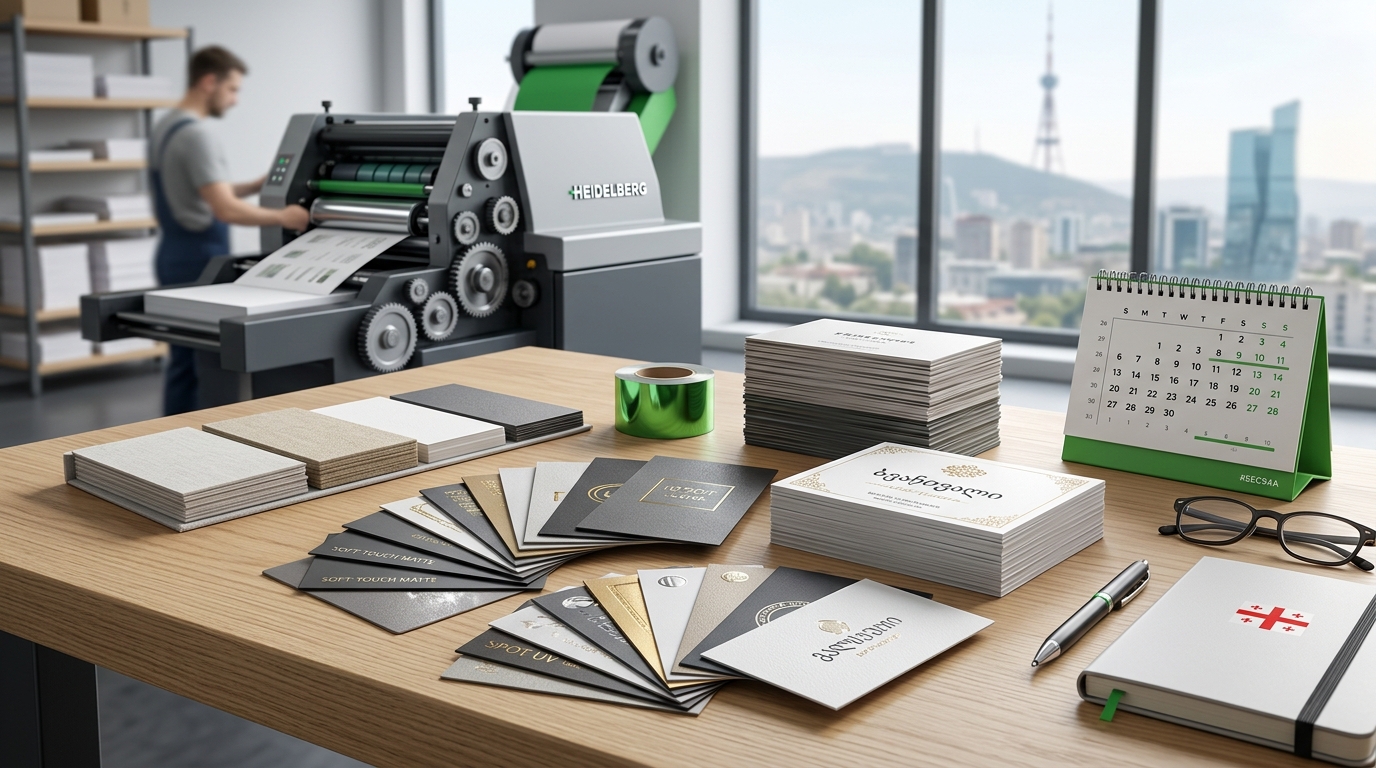
The method used to apply your design to the paper depends on your required quantity, design complexity, and material choice.
Digital Printing
Digital printing is the most common method for short-to-medium runs (typically 50 to 500 cards). It offers rapid turnaround times and requires minimal setup, making it the go-to solution when you are urgently looking for "printing needs near me." Digital presses have advanced significantly, offering excellent color accuracy and crisp text. If you need cards printed quickly for an event tomorrow, digital printing services are your best option.
Offset Printing
Offset printing involves transferring ink from a plate to a rubber blanket, and then onto the paper. It is the most cost-effective method for large volume orders (usually 1,000 cards or more). Offset printing provides unparalleled color fidelity, especially when using specific Pantone (Spot) colors to match strict corporate branding guidelines. However, because it requires custom plates and setup, turnaround times are longer than digital printing.
UV Printing
For non-traditional materials, UV printing is a game-changer. This technology uses ultraviolet light to instantly cure the ink as it is applied. Because the ink dries immediately and sits on top of the surface, UV printing can be used on dark papers, plastics, acrylics, and even wood. UV printing also allows for "Spot UV" effects, where a clear, glossy layer is printed over specific parts of the design (like a logo) to make it pop against a matte background.
Elevating Your Design: Post-Press Finishes
The printing process is only half the journey. The application of post-press finishes is what transforms a standard piece of paper into a memorable brand asset.
Lamination
Lamination involves applying a thin plastic film over the printed card. This adds durability, water resistance, and a distinct tactile quality.
- Matte Lamination: Provides a smooth, non-reflective finish that exudes modern elegance.
- Gloss Lamination: Enhances color vibrancy and provides a shiny, protective layer.
- Soft-Touch (Velvet) Lamination: A premium matte finish that feels like suede or velvet to the touch. It is highly popular for luxury business cards.
Foil Stamping
Foil stamping uses heat and pressure to apply a thin layer of metallic foil (commonly gold, silver, copper, or rose gold) to the card. Foil cannot be replicated with standard CMYK ink and provides a highly reflective, premium look. It requires the creation of a custom metal die, which adds to the setup time and cost.
Embossing and Debossing
Embossing presses the paper from underneath to create a raised 3D effect, while debossing presses into the front of the paper to create an indentation. Both techniques add a sophisticated, tactile element to your logo or typography. They work best on thicker, uncoated paper stocks (350gsm or higher) that can hold the impression.
Custom Shapes and Die-Cutting
If you want a card that breaks away from the standard rectangle, die-cutting is the solution. Whether it is rounded corners, a card shaped like your product, or intricate internal cutouts, custom shapes grab attention. For short runs or highly intricate designs, plotter cutting or laser cutting can be utilized instead of traditional metal dies.
Preparing Your Artwork for Print
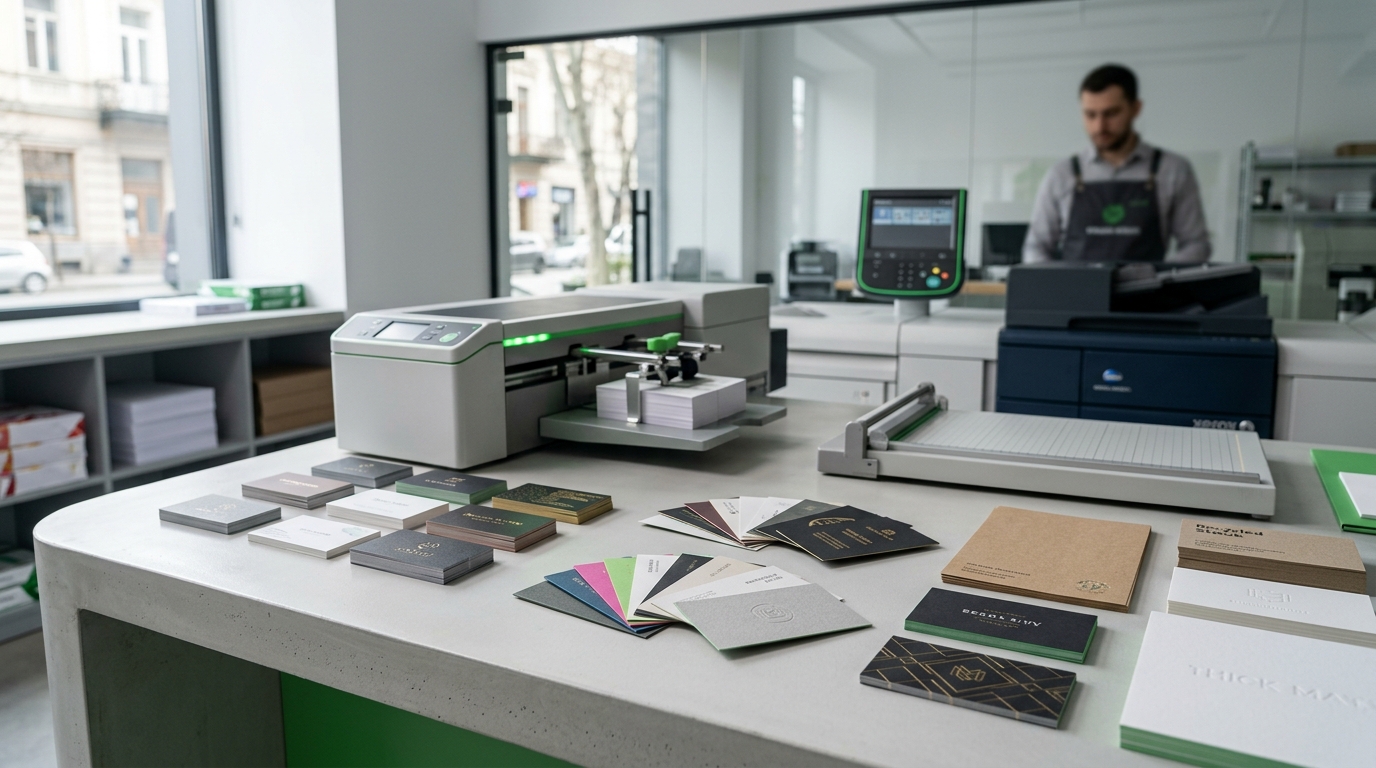
One of the most common reasons for delays at any printing company in Tbilisi is improperly prepared artwork. To ensure a smooth process and avoid unexpected results, follow these industry-standard guidelines:
- Color Mode: Always design your business cards in CMYK color mode, not RGB. RGB is used for screens, and many bright RGB colors cannot be reproduced with physical ink.
- Resolution: All raster images (photographs, complex textures) must be at least 300 DPI (Dots Per Inch) at the final print size to prevent pixelation.
- Bleed: If your design features background colors or images that reach the very edge of the card, you must include a "bleed." This means extending the artwork 2mm to 3mm beyond the final cut size. This ensures there are no thin white borders if the cutting blade shifts slightly.
- Safe Zone: Keep all important text and logos at least 3mm to 4mm away from the cut edge to ensure they are not accidentally trimmed off.
- Fonts: Always convert your text to outlines (or curves) before exporting your final PDF. This prevents font substitution errors if the printing shop does not have your specific font installed.
Turnaround Times: What to Expect
Turnaround times vary significantly based on your chosen specifications and the current production schedule of the print shop. If you are searching for "printing services near me open" for an immediate need, standard digital printing on in-stock paper can often be completed within 1 to 2 business days, provided your artwork is print-ready.
However, complex cards require more time. Offset printing runs, or cards requiring custom post-press finishes like foil stamping, embossing, or die-cutting, typically require several business days to a week. Each finishing process is a separate step that requires setup, calibration, and drying/cooling time. When requesting a quote, always specify your deadline so the production team can advise on what is achievable.
Comprehensive Printing Solutions
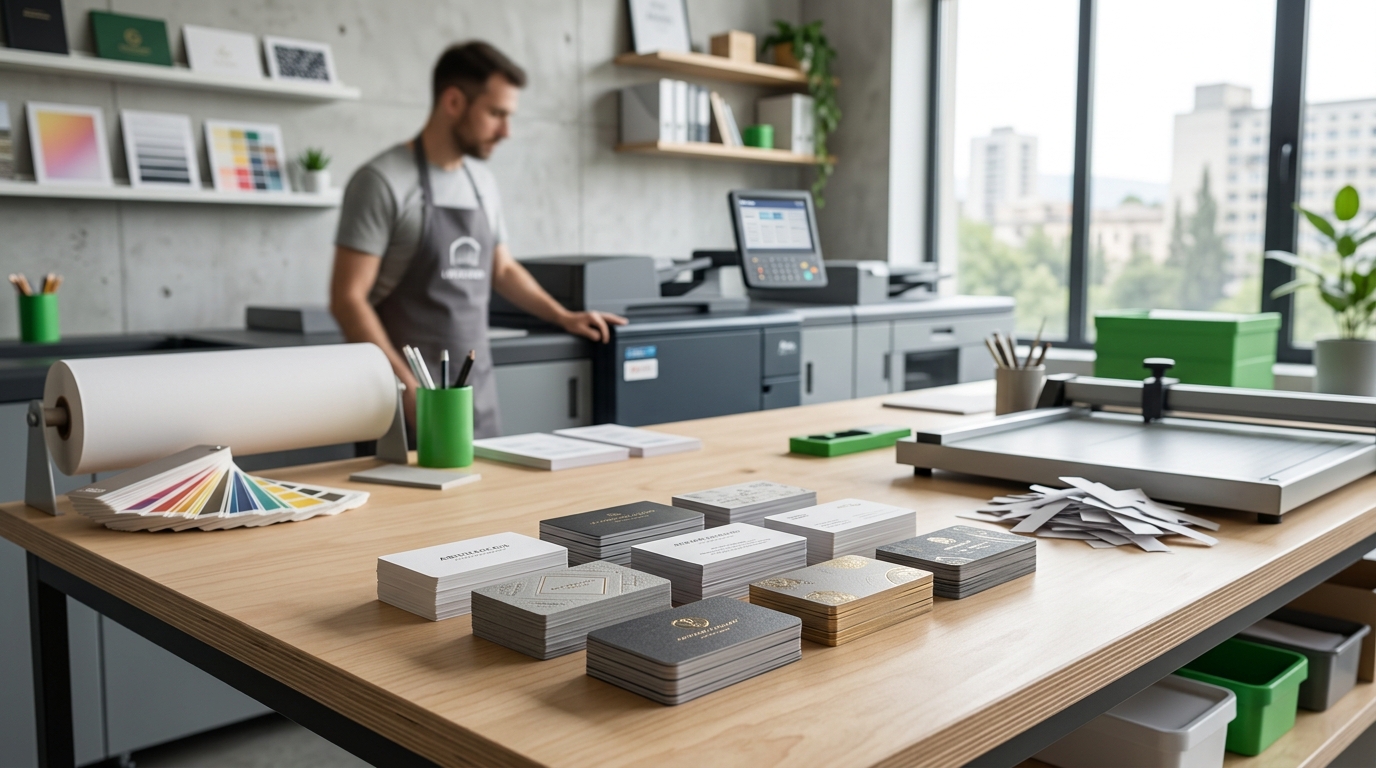
While business cards are a fundamental networking tool, they are often part of a broader branding strategy. Craftarea provides a holistic approach to brand visibility. For instance, the same attention to detail applied to your business cards can be extended to standard corporate gifts or custom promo branding for your next exhibition. Interestingly, while many tech-focused businesses look for a 3d printing service tbilisi for rapid prototyping of products, 2D printing remains the undisputed backbone of daily business communication and networking.
How to Request an Accurate Quote
To get an accurate price and timeline from Craftarea, be prepared to provide the following details:
- Quantity: How many cards do you need? (e.g., 100, 500, 1000).
- Dimensions: Standard 85x55mm, or a custom size?
- Paper Type: Do you prefer standard coated, uncoated, or a specific textured/specialty paper? Include your preferred thickness (GSM) if known.
- Printing Method: Single-sided or double-sided? Full color (CMYK) or specific Pantone colors?
- Finishes: Do you require lamination, foil stamping, embossing, or rounded corners?
- Artwork Status: Is your file print-ready (PDF with bleed and outlined fonts), or do you need design adjustments?
By understanding these elements, you can confidently navigate the process of business card printing in Tbilisi. A well-executed business card is a small but powerful investment in your professional image. To discuss your specific requirements or to submit your print-ready files, contact Craftarea today.