
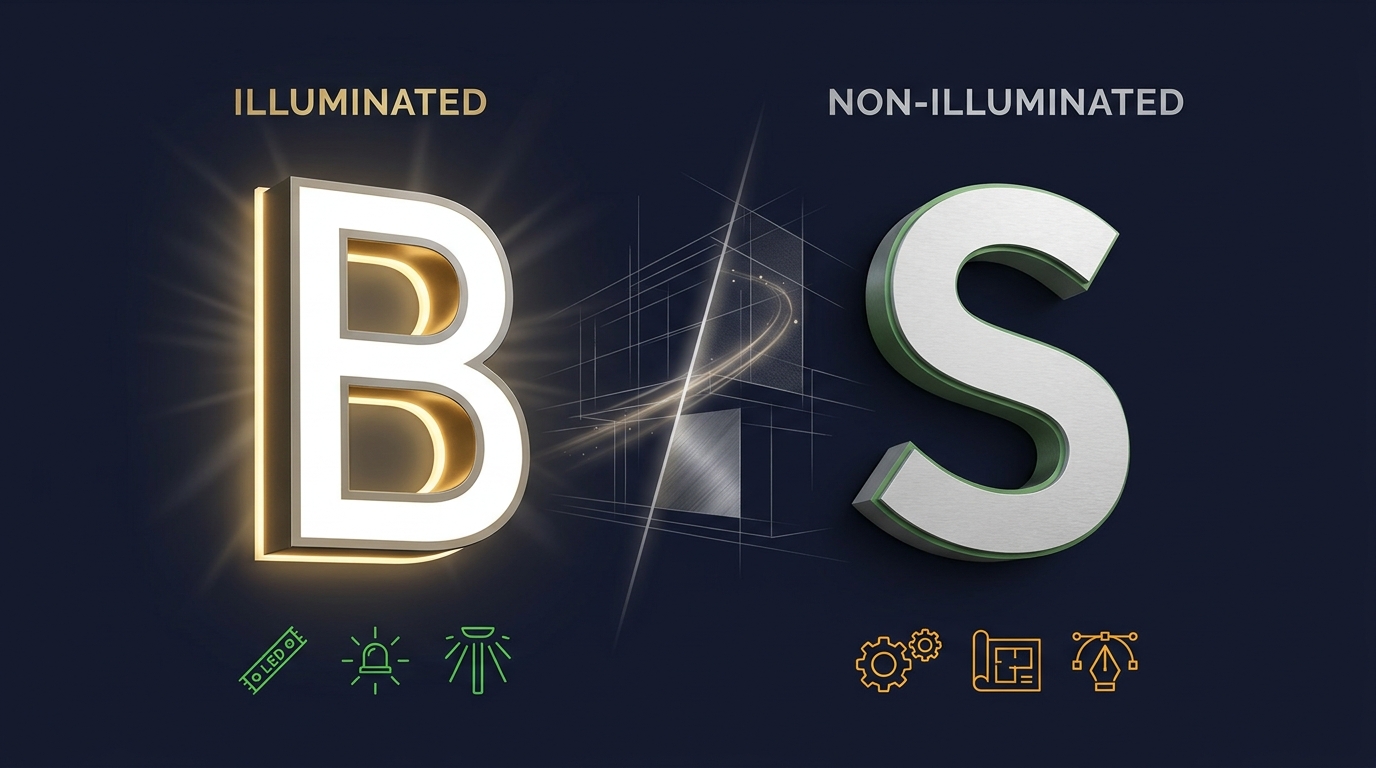
Choosing between an illuminated 3D letter glow sign board and standard non-illuminated dimensional lettering depends heavily on your specific business hours and physical location. If you rely on evening foot traffic, glowing signs provide essential nighttime visibility. Conversely, non-illuminated signage offers an elegant solution for daytime-only operations.
Understanding the Anatomy of Illuminated Dimensional Letters
Before diving into the complex decision between illuminated and non-illuminated options, it is helpful to understand the basic physical components that make up a high-quality dimensional sign. Unlike flat, printed panels that rely entirely on surface graphics, dimensional signage uses individual physical letters, logos, and brand marks that physically protrude from the backing wall or building facade.
In the signage industry, the front surface of the letter is called the "face." For a front-lit 3D letter glow sign board, this face is typically constructed from a specialized translucent acrylic. This material diffuses internal LED lighting evenly across the surface.
The sides of the dimensional letters are known as the "returns." These returns provide the critical depth that creates natural architectural shadows during the day. In an illuminated sign, the returns also serve the functional purpose of housing the internal wiring and the low-voltage LED modules required to illuminate the unit.
Finally, the "backing" is the rear portion of the letter, which structurally secures the lighting components and provides the mounting points for installation onto your wall. By combining these three elements—faces, returns, and backings—Craftarea signage professionals can craft a highly impactful visual asset tailored precisely to your brand's unique identity.
Is an Illuminated Sign Right for You?
Deciding whether to invest in an illuminated display often comes down to evaluating your business's operating hours, its physical location, and the competitive landscape of your immediate surroundings. If your establishment remains open after sunset—such as a restaurant, a late-night pharmacy, or a 24-hour fitness center—nighttime visibility is arguably a strict necessity rather than a luxury. Without internal lighting, your storefront runs the risk of fading into the darkness.
Even if your business operates strictly during standard daytime business hours, a 3D letter glow sign board can still offer significant advantages depending on your location. Consider the following benefits:
- Weather Conditions: For businesses situated in regions with heavy cloud cover or shortened winter days, illuminated signs guarantee visibility regardless of ambient light.
- Competitive Environments: If your retail space is located in a bustling shopping plaza where neighboring businesses utilize glowing signage, illuminated text helps ensure your storefront commands equal attention.
- Continuous Marketing: Lighting transforms your building's exterior into a 24/7 advertisement, maintaining brand presence long after your staff has locked the doors.
Comparing Illuminated vs. Non-Illuminated Signage
To fully appreciate the differences, it is crucial to compare a 3D letter glow sign board against standard non-illuminated dimensional lettering across a variety of practical factors. Both options offer the premium, architectural look of dimensional text, but their operational characteristics differ significantly:
- Fabrication Costs: Illuminated letters require a much more complex manufacturing process to house LED modules and power supplies. Standard non-illuminated letters can often be router-cut from solid blocks of material, lowering the initial investment.
- Long-Term Maintenance: While modern LEDs are highly reliable, any electrical component will eventually require maintenance. Non-illuminated signs are virtually maintenance-free, generally requiring nothing more than routine surface cleaning.
- Installation Process: Mounting illuminated signs requires careful electrical planning to safely route wiring through exterior walls. Non-illuminated letters avoid these electrical hurdles, allowing for straightforward stud-mounting on almost any solid surface.
Exploring Illumination Styles for Dimensional Letters
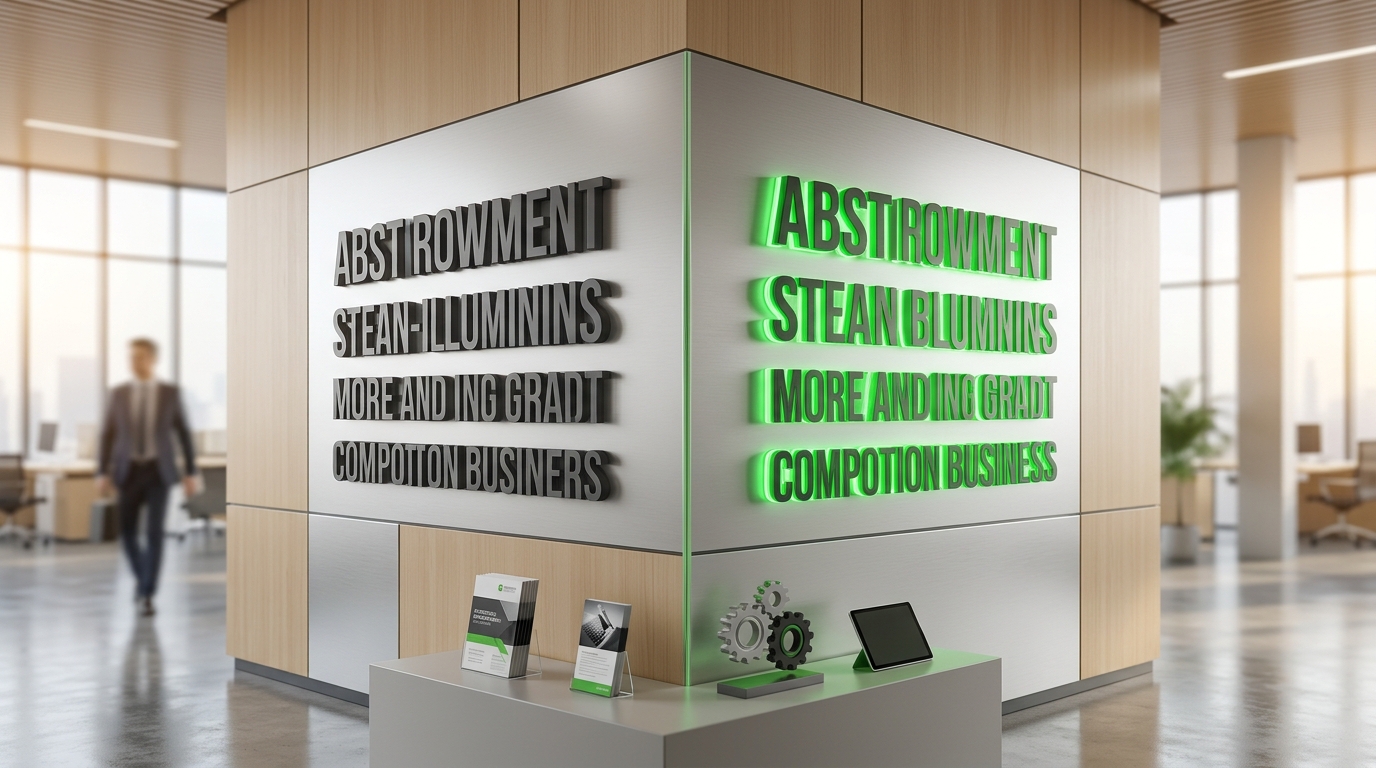
If you decide that enhanced nighttime visibility is essential, you are not limited to a single generic style of lighting. The versatility of a 3D letter glow sign board allows for multiple distinct illumination methods, each providing a completely different aesthetic for your storefront.
- Front-Lit (Face-Illuminated) Letters: The front face of each letter is made from a translucent acrylic material, while the side returns are opaque. Internal LED modules are directed forward, which cuts cleanly through the darkness for maximum long-distance brand recognition.
- Halo-Lit (Reverse-Illuminated) Letters: The front face and side returns are both completely opaque. LED modules point backward, projecting light directly onto the mounting wall behind the sign, creating a soft, elegant halo of light that silhouettes the dark letters.
- Edge-Lit Letters: This design features opaque front faces and backings but utilizes thick, translucent acrylic for the side returns. The light spills out exclusively from the edges, creating a striking, futuristic appearance that emphasizes depth.
- Combination Lighting: Incorporates both front-lit and halo-lit techniques simultaneously. This allows a brand to display a brightly illuminated colored face while simultaneously projecting a contrasting halo of white light onto the background wall.
The Case for Non-Illuminated Dimensional Signage
While the benefits of glowing text are substantial, it is equally important to acknowledge when illumination might be unnecessary. Not every commercial space requires a brightly lit facade. If your primary goal is to enhance interior branding in a corporate reception area or a modern office space, non-illuminated dimensional text provides a highly professional aesthetic.
Solid metal letters made from brushed aluminum or polished brass convey a sense of permanence, stability, and luxury. Similarly, thick, laser-cut acrylic letters can provide sharp, glossy, and vibrant brand colors that pop perfectly under standard overhead architectural lighting.
Furthermore, if your exterior building already features powerful architectural floodlights directed at your facade, standard non-illuminated letters may be perfectly sufficient. In these scenarios, a dedicated 3D letter glow sign board might be redundant for your specific location.
Key Material Choices for Your Glowing Signage
The longevity and visual appeal of your dimensional text depend heavily on the materials selected during the design phase. When consulting with fabrication teams, you will typically choose from a combination of metals and plastics tailored to your specific environment.
For the structural sides, or returns, aluminum is the industry standard. Aluminum is lightweight, highly durable, and naturally resistant to rust, making it ideal for exterior outdoor advertising.
These aluminum returns can be painted to match your precise brand colors or left with a brushed finish for an industrial look. For high-end applications, stainless steel returns offer a premium finish and exceptional resistance to harsh coastal weather conditions.
The faces of a front-lit 3D letter glow sign board are almost exclusively crafted from cast acrylic. High-quality sign-grade acrylic is specifically formulated to diffuse LED light evenly, preventing unsightly hot spots where individual LED bulbs might otherwise be visible.
How Craftarea Fabricates Illuminated Letters
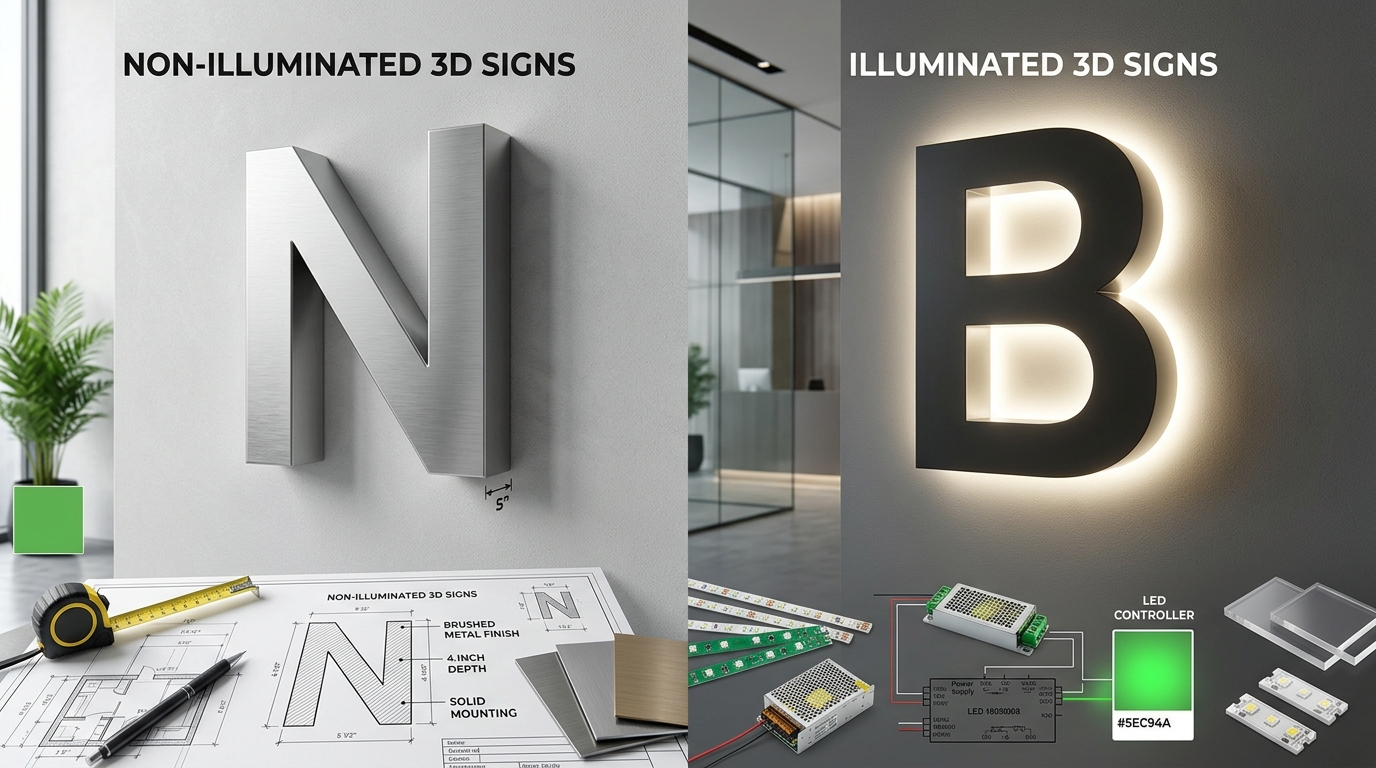
The process of bringing a dimensional concept to physical reality requires precision engineering and specialized craftsmanship. Understanding how these signs are made can help set accurate expectations regarding project timelines and the overall investment required.
The fabrication process at Craftarea begins with detailed digital vector files. These files guide advanced CNC routers and laser cutting machines, which slice the acrylic faces and aluminum backings with millimeter precision.
Once the flat components are cut, the three-dimensional aspect begins to take shape. For metal returns, specialized automated bending machines shape strips of aluminum to perfectly match the contours of the router-cut letters, which are then fastened or welded to the backings.
Next comes the crucial electrical phase. Technicians carefully map and install low-voltage LED modules inside the hollow cavity of each letter. The placement of these modules must be calculated precisely to ensure the sign illuminates evenly across its entire surface.
Installation Considerations for Glowing Sign Boards
Designing and fabricating a stunning display is only half the project; successful installation requires careful planning and structural assessment. The physical characteristics of your building's facade will directly dictate how the unit is ultimately mounted.
When planning an exterior installation, the most critical factor is determining electrical access. Because every individual letter requires a power connection, installers must route wires safely through the building's facade.
If the wall is accessible from behind, each letter can be flush-mounted directly to the surface for a seamless, floating appearance. The power supplies can then be safely housed inside the building structure away from the elements.
However, if you are mounting the 3D letter glow sign board onto a solid brick wall where interior access is impossible, flush mounting may not be viable. In these scenarios, the letters are typically mounted onto a custom-fabricated metal raceway panel that holds the letters and hides all the interconnecting wiring internally.
Getting Your Signage Project Started
Your building's signage serves as the most prominent physical representation of your brand, acting as the crucial first impression for every customer. Whether you require a massive, brightly illuminated 3D letter glow sign board or a set of refined, standard dimensional letters, selecting the right design is paramount to your visual identity.
Because every commercial space is unique, there is no one-size-fits-all solution. The final cost, production timeline, and ideal material composition will depend entirely on the specific inputs of your project, including the overall dimensions and the complexity of the installation surface.
To review digital mockups, discuss available material options, and receive a comprehensive quote tailored to your 3D letters or broader signage needs, contact Craftarea today. Their team will guide you through the process of determining exactly what information is needed to bring your vision to life.