

Before producing exterior signage in Tbilisi, identify the address, property owner, building status and purpose of the proposed wording. Do not assume that every sign follows the same approval process. Prepare dimensions and a visual proposal, then confirm the requirements for that project with the relevant authority.
Separate permission to use the site, any applicable public approval process, and the technical design of the installation. Record who will verify each issue before manufacturing begins. An attractive design or a supplier’s quotation does not establish approval or structural suitability.
Key Elements of Tbilisi's Outdoor Advertising Policy
Article 6 of Georgia’s Law on Advertising distinguishes placement on state or municipal property from private property and separately addresses premises-identification wording. These distinctions do not determine every requirement for an individual project. Check the current official text and confirm the applicable procedure for the address.
- Building status: establish whether the actual building or site has a protected status. Give the relevant authority the address and proposal instead of inferring permitted designs from a neighborhood name.
- Dimensions and position: show the proposed sign width, height, mounting height and its relationship to doors, windows and architectural features. Ask whether any project-specific dimensional conditions apply.
- Structure and access: describe the facade, sign weight, mounting arrangement and installation access. Ask the responsible technical specialist what assessment or documentation is needed for the site.
- Lighting: state whether the sign is unlit, front-lit or backlit, where equipment will sit and how it will operate. Confirm any applicable conditions before choosing components.
Signage Types and the Outdoor Advertising Policy
Compare sign constructions for the proposed location. Selecting a familiar format does not by itself establish that the design is approved.
1. 3D Letters
Individual 3D letters can leave areas of the facade visible between the characters. The proposal should still show overall dimensions, fixings, any backing rail and lighting. Do not treat this construction as a guarantee of municipal acceptance.
2. Illuminated and Neon Signs
Front-lit, backlit and neon-style signs give different visual effects. Include the actual lighting arrangement in the proposal and consider nearby windows and the intended hours of use. A halo effect alone does not establish compliance for a historic or residential location.
3. Standard Flat Signage and Panels
Flat panels and lightboxes can provide a continuous surface for a logo or message. Compare the proposed material, dimensions, weight and mounting arrangement. Their suitability and any applicable conditions should be checked for the actual address.
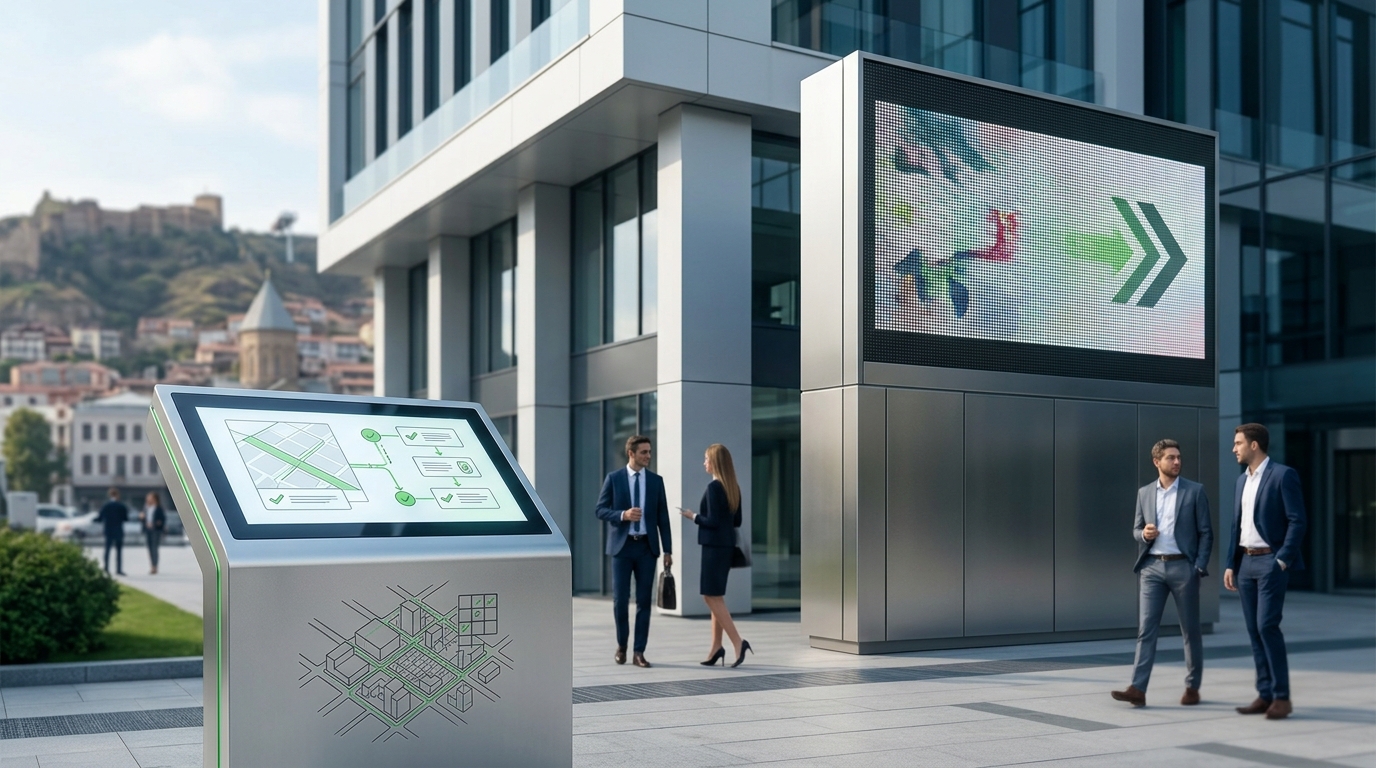
Practical Examples of the Outdoor Advertising Policy in Action
Use design comparisons to prepare questions for a project review, rather than to predict an approval decision. The following examples are planning exercises, not approved installations.
For a cafe in an older building, prepare alternatives showing individual letters and a panel at the same scale. Include facade details, proposed fixings and lighting. Ask the relevant authority which requirements apply before treating either option as feasible.
For a shop in a modern commercial center, obtain the site’s signage requirements and identify the party authorized to approve use of the facade. Check any additional public requirements for the address; a modern building does not automatically permit large or dynamic displays.
Material Selection Under the Outdoor Advertising Policy
Material selection affects weight, finish, lighting and maintenance. Include the actual product or proposed specification in the design brief; a material name alone does not establish permission or service life.
- Acrylic: compare a suitable grade and finish for the proposed sign face. Review the sample, thickness and lighting result with the fabricator.
- Aluminum and other metals: specify the grade, surface finish, dimensions and supporting structure. The metal’s appearance is a design choice, not evidence that an authority will accept it.
- PVC, film and banner material: describe the intended use period, substrate and attachment method. Confirm suitability for the site and how the graphic will be maintained or removed.
Installation Methodologies and Structural Safety
Plan mounting from the sign dimensions and weight, the actual facade and environmental exposure. A professional site assessment should establish a suitable arrangement; a general article cannot specify anchors for an unseen wall.
- Direct mounting: provide photographs and available information about the wall and any facade layers. A qualified installer should assess the substrate and proposed fixings before they are included in the installation plan.
- Standoff mounts: these can leave a gap behind letters or a panel. Review the required spacing, loads, lighting and access for the actual design.
- Rail or sub-frame mounting: letters may be carried on a supporting rail rather than individually attached to the wall. The rail and its own fixings still need assessment; this method does not bypass site restrictions or establish structural adequacy.
Electrical Safety and Illumination Hardware
For an illuminated sign, define the power supply location, cable route, exposure and access for inspection. Have the proposed electrical arrangement and components checked for the installation.
- Component protection: request the selected LED and power-supply documentation and check suitability for their actual exposure. An IP rating describes particular protection characteristics; it does not establish the performance of the whole assembled sign.
- Cable routing: include wiring and equipment locations in the drawing, with access for inspection and replacement. Confirm the arrangement with the installer and the party responsible for the site.
- Lighting selection: compare the actual components, power demand, brightness and maintenance needs. Choosing LED technology alone does not establish compliance or a guaranteed operating life.
Maintenance Considerations for Exterior Displays
Plan access for cleaning, fixing inspections and electrical maintenance before installation. The method and schedule depend on the materials, components and exposure. Record who will perform this work and how defects or changes will be assessed.
Working with Craftarea Under the Outdoor Advertising Policy
When requesting a Craftarea quotation, distinguish design, drawings, fabrication, transport and installation. Identify who will check site permissions and any applicable approval requirements before the design is released for production.
Agree the responsible party for authority enquiries and any required application. Confirm separately which drawings, visualisations or technical details Craftarea can supply. A manufacturing proposal does not replace an authority decision, and no approval outcome should be promised in the production quote.
The installation plan should be based on the actual facade, proposed sign and exposure. Materials and professional workmanship do not justify a promise of secure attachment in every wind or weather condition; the design and its limits need project-specific assessment.
To get an accurate quote for outdoor advertising production and physical installation from Craftarea, we need a few specific details about your project. Please provide our team with the following inputs:
- The proposed finished dimensions, mounting height and any confirmed project conditions.
- Clear photographs of the intended installation location and the specific facade materials.
- Your preferred manufacturing materials (e.g., acrylic faces, brushed aluminum returns, PVC backing).
- Your available logo or artwork files, with the intended text and dimensions.
- The proposed illumination style and any conditions already confirmed for the site.
Before production, keep one agreed version of the dimensions, artwork, materials, lighting and mounting plan. Check that any required site or authority decisions relate to that version. If the design changes, confirm whether further review is needed before work proceeds.
Prepare one project brief for review and production
Keep the address, photographs, wording, dimensions, lighting and mounting plan together. Record the responsible person for site permission, authority enquiries, artwork approval and installation, so each participant works from the same version.
Sign production · Outdoor advertising projects · Official source: Law on Advertising, Article 6